
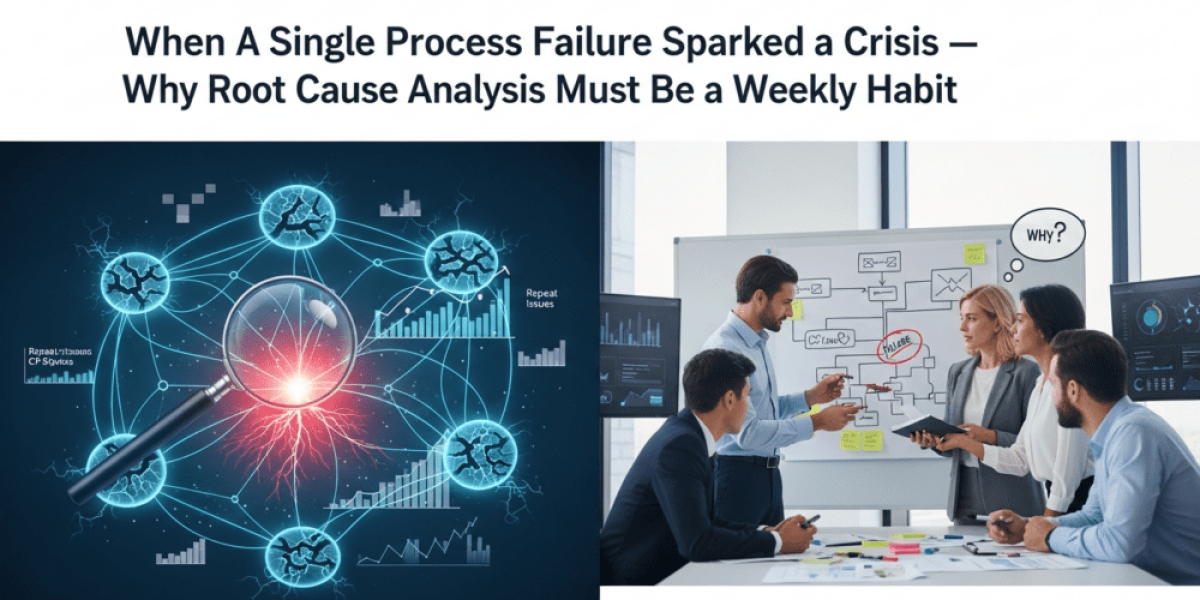
A Story to Start
In late 2025, a major subscription platform faced a sudden spike in cancellations.
At first, leadership assumed it was a seasonal fluctuation.Then they blamed market trends.Then pricing.
But customers kept leaving.
Escalations rose.Support volume grew.Social sentiment tanked.Refund requests increased.Supervisors flagged “the same issue repeating.”
When CP Spike audited the operation, we discovered a single root cause:
A broken password reset flow.
Here’s what happened:
A small UI update changed the CTA text
Customers clicked the wrong path
They received incomplete instructions
They contacted support in frustration
Agents misunderstood the issue
Customers churned after bad resolution attempts
One broken process created a chain reaction across six departments.
The company didn’t need a marketing campaign.It didn’t need more agents.It didn’t need discounts.
It needed root cause analysis —every week, not every crisis.
After CP Spike implemented a structured RCA engine:
repeat contacts dropped 31%
escalations decreased
AHT improved
product assumed responsibility for friction points
marketing updated messaging
knowledge was corrected
the password issue was permanently resolved
churn stabilized
Problems didn’t disappear —they stopped repeating.
Why CX Problems Repeat (Even in Mature Operations)
According to Gartner’s 2025 CX Continuity Study:
43% of CX issues are recurring
1 in 4 repeat contacts come from the same root cause
68% of CX teams focus on symptoms instead of causes
removing root causes reduces cost by 29%
RCA improves customer satisfaction and team stability
If the problem keeps coming back,you’re fixing the wrong thing.
The 7 Reasons CX Teams Fail to Address Root Causes
1. Lack of RCA Rituals
Teams do RCA only during crisis — not proactively.
2. Blame Culture
People hide issues instead of exposing them.
3. Data Silos
Product, CX, and Engineering see different truths.
4. No Central Issue Log
Patterns remain invisible.
5. Fast Fixes Replace Real Fixes
Teams apply patches instead of solutions.
6. No Ownership Model
Who owns the fix? Who owns preventing recurrence?
7. Symptoms Look Urgent — Causes Look Invisible
Teams focus on noise, not insight.
What’s Overhyped vs What’s Actually Working
Overhyped:
“Add more agents to reduce the backlog.”
Reality:More agents don’t solve the cause of the backlog.
Overhyped:
“Fix issues one by one.”
Reality:Solve patterns, not individual cases.
Actually Working:
weekly RCA reviews
cross-functional investigations
customer journey mapping
issue clustering
ownership assignment
action logs
follow-up verification
customer recovery for impacted groups
This is CP Spike’s RCA discipline.
The CP Spike Root Cause Analysis Framework
1. Issue Capture & Clustering
Ticket patternsEscalation themesCall sentiment spikesProduct bug correlations
2. Impact Analysis
VolumeChurn riskCustomer effortBrand impactCost impact
3. Root Cause Investigation
Workflow auditProduct reviewAgent interviewsTool behavior analysisCustomer journey tracing
4. Fix Design
Permanent solutionOperational changeProcess updateTraining updateKnowledge correctionTool enhancement
5. Ownership Assignment
One owner per root cause.
6. Verification & Monitoring
Post-fix monitoringVolume trackingSentiment trackingAgent reporting
7. Cross-Functional Communication
Product → CX → Engineering → MarketingEveryone aligned, every time.
A Real CP Spike RCA Transformation
A large e-commerce brand struggling with repeat “refund delay” complaints discovered:
the issue wasn’t slow refunds
it was unclear documentation
AND mismatched agent guidance
AND missing status updates
AND a labeling mismatch in their warehouse system
Four root causes —one customer frustration.
After a CP Spike-led RCA program:
repeat refund contacts dropped 38%
ticket volume stabilized
brand trust improved
leadership gained clearer visibility
product updated workflows
support became proactive
Root causes hide in plain sight —patterns reveal them.
Key Takeaways
Unresolved root causes multiply cost, frustration, and churn.
RCA must be a weekly habit, not a crisis reaction.
Fixing symptoms creates temporary relief — fixing causes creates stability.
RCA requires cross-functional coordination.
The best operations are the ones that learn before things break.
Final Thoughts: Fix the Cause, Not the Noise
At CP Spike, we tell leadership teams:
“Every recurring problem is a teacher — unless you ignore it.”
RCA builds resilient operationsand protects customer trust.
SEO Meta Description
Recurring issues destroy CX. Learn how CP Spike’s Root Cause Analysis framework eliminates repeat problems and stabilizes operations.
CTA
Want to eliminate recurring customer problems permanently?Adopt CP Spike’s Root Cause Analysis Program.