A Story to Start
In 2024, a major insurance service center contacted CP Spike with a confusing issue:
Their QA scores were excellent…but their CSAT was dropping.
Every monthly report showed:
QA scores stable at 92–95%
CSAT slipping steadily
Complaints increasing
Escalations rising
Supervisors insisting “agents are performing well”
Agents confused because scores didn’t match customer feedback
The discrepancy grew so large that executive leadership demanded an investigation.
When CP Spike ran a QA Governance Audit, we uncovered the root cause:
QA calibration was nonexistent.
Different QA analysts had different expectations.Some scored tone heavily.Some ignored tone.Some scored adherence to scripts.Some scored outcomes.Some penalized small mistakes.Others didn’t.
The QA team wasn’t aligned with itself —let alone aligned with customers.
After implementing CP Spike’s Calibration Framework:
QA variance dropped 41%
customer complaints decreased
CSAT stabilized
supervisors coached with clarity
agents trusted QA again
quality improved consistently across shifts & locations
When QA isn’t aligned,CX can’t be aligned.
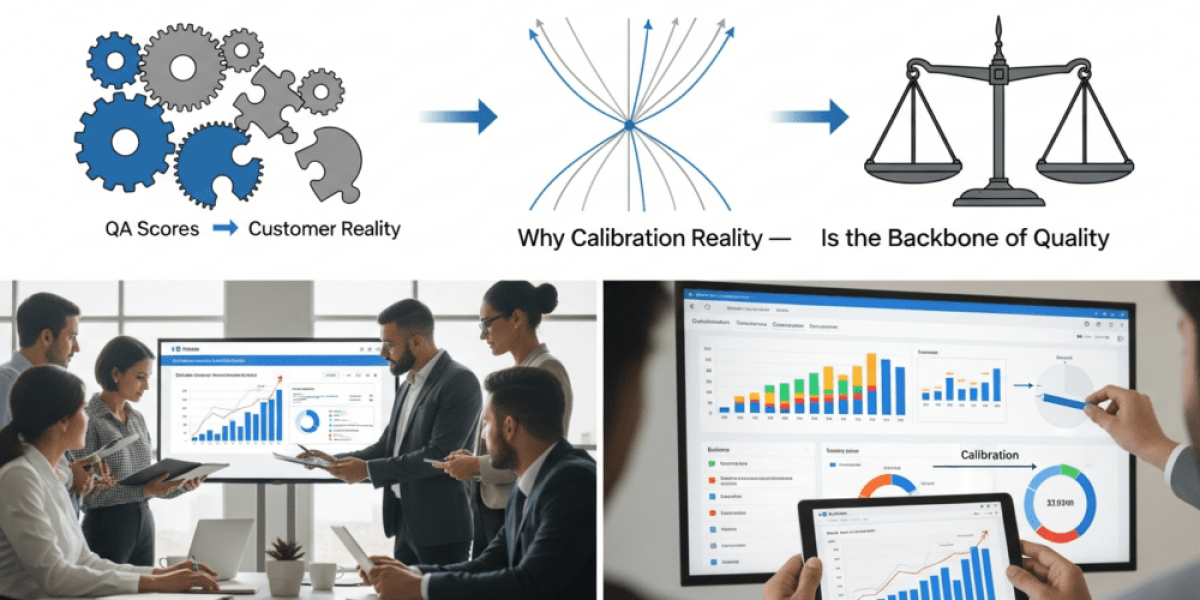
Why QA Scores Often Don’t Reflect Customer Reality
According to the 2025 CX Quality Standards Report:
52% of QA programs suffer from inconsistent scoring
38% of agents say QA feedback contradicts customer sentiment
43% of QA teams rarely calibrate
inconsistent QA → inconsistent coaching → inconsistent CX
misaligned QA correlates with higher churn and lower FCR
Quality isn’t just a number.It’s a discipline.
The 7 Hidden Causes of QA Inconsistency
1. Different Scoring Interpretations
“What is empathy?”“What counts as resolution?”Everyone answers differently.
2. No Calibration Rituals
Teams rarely listen and score calls together.
3. Outdated QA Rubrics
Criteria don’t reflect modern CX expectations.
4. Too Much Focus on Scripts
Scripts ≠ customer satisfaction.
5. Subjective Tone Scoring
Tone evaluation varies widely across analysts.
6. Lack of Customer-Lens Scoring
QA teams score procedure, not outcomes.
7. No Feedback Loop With Operations
QA identifies issues that never become training or process updates.
What’s Overhyped vs What’s Actually Working
Overhyped:
“More QA analysts will fix accuracy.”
Reality:More analysts = more inconsistency unless aligned.
Overhyped:
“Strict scoring guarantees quality.”
Reality:Strict does not equal accurate.Accurate = effective.
Actually Working:
multi-level calibration
customer-lens rubrics
outcome-based scoring
tone scoring guidelines
QA + Ops alignment
regular calibration workshops
dual-scoring on high-risk interactions
QA dashboards for consistency
This is CP Spike’s QA governance philosophy.
The CP Spike Calibration Framework
1. Baseline Variance Measurement
Score the same calls across multiple analysts → identify gaps.
2. Redesign QA Rubric
ShorterClearerOutcome-basedCustomer-focused
3. Weekly Calibration Rituals
Analysts, supervisors, and trainers score calls together.
4. Tone & Empathy Scoring Guide
Clear definitions + examples + acceptable variations.
5. Cross-Shift & Cross-Site Alignment
Every location scores the same way.
6. QA Dashboard
VarianceScoring trendsCommon misinterpretations
7. Coaching Integration
Feedback flows directly into agent development plans.
A Real CP Spike QA Transformation
A global customer support center suffering from QA–CSAT mismatch saw:
32% improvement in QA reliability
higher agent buy-in
drastically fewer disputes
coaching aligned with actual customer expectations
consistent call handling across shifts
regained customer trust
When QA becomes precise,CX becomes predictable.
Key Takeaways
QA scores without calibration are misleading.
Variance destroys quality and damages trust.
Calibration aligns QA with reality — not opinion.
Outcome-based scoring reflects what customers truly feel.
QA governance is essential for long-term CX excellence.
Final Thoughts: QA Must Measure Truth, Not Guesswork
At CP Spike, we remind leaders:
“You don’t improve what you can’t measure — and you can’t measure what isn’t aligned.”
Calibration transforms QA from a scorekeeperinto a driver of CX excellence.
SEO Meta Description
QA scores often fail to reflect true customer experience. Learn how CP Spike’s calibration framework aligns scoring, coaching, and customer reality.
CTA
Want accurate QA scoring that reflects real customer experience?Implement CP Spike’s QA Calibration Framework.
April 2026