A Story to Start
In mid-2025, a home services company reached out to CP Spike after losing a high-value customer following a simple support issue.
Here’s what happened:
A customer called with a billing discrepancy.The agent was polite, clear, and empathetic — so far, so good.
But the billing issue required escalation to the Finance Team.
This is where everything broke:
The agent didn’t tag the case correctly
The Finance Team didn’t receive full context
The customer had to repeat the problem twice
The Finance Team asked for documents already provided
No ownership was assigned
No follow-up happened for 48 hours
Customer sent a complaint
Customer churned after 5 years of loyalty
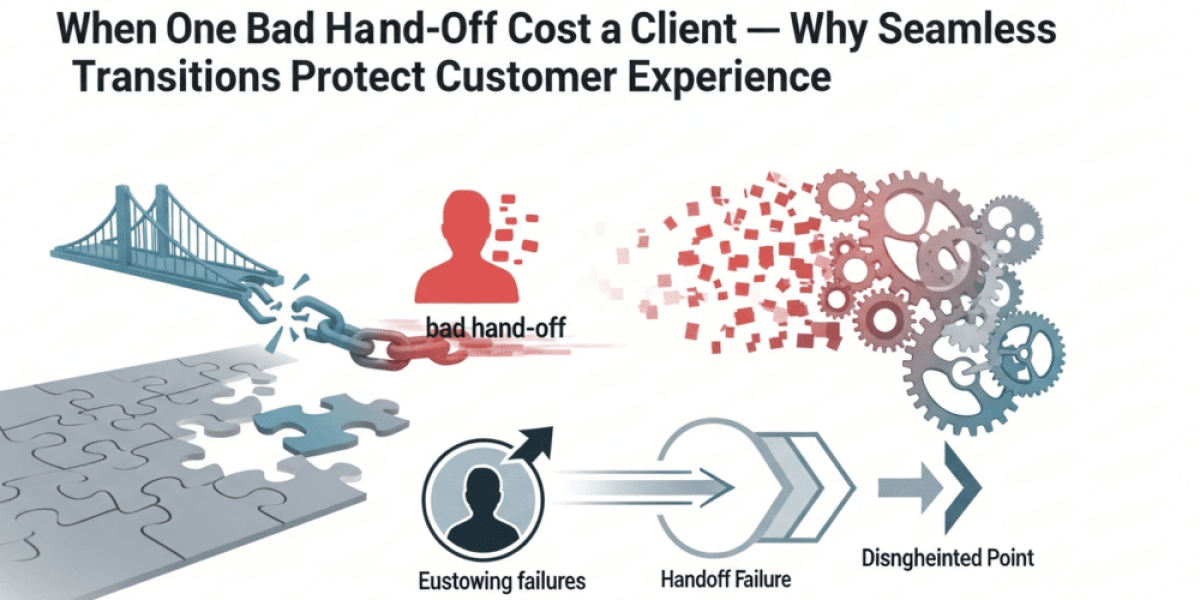
The original issue wasn’t complex.The handoff was.
When CP Spike performed an internal workflow audit, we discovered:
handoff tags were inconsistent
context was missing in 38% of escalated cases
no defined ownership model
teams used different internal vocabularies
no SLA for internal responses
escalation templates were outdated
A single handoff exposed a systemic weakness.
After redesigning their handoff workflows:
repeat contacts dropped 31%
escalations reduced 22%
resolution speed improved 27%
customer complaints decreased
cross-team collaboration strengthened
Handoffs determine CX quality —more than most leaders realize.
Why Handoffs Fail in Most Organizations
Forrester’s 2025 CX Continuity Study reports:
63% of customer frustration comes from repeated explanations
46% of escalations are caused by poor internal handoffs
1 in 3 handoffs lose critical context
Poor handoffs increase churn risk by up to 29%
The customer journey doesn’t break at the first step.It breaks at the transition.
The 6 Most Common Handoff Failures
1. Missing Context
Agents transfer cases without:
prior steps
screenshots
customer sentiment
attempted solutions
2. No Ownership
“If everyone owns it, no one owns it.”
3. Inconsistent Tagging
Wrong category = wrong team = wasted time.
4. Different Internal Vocabulary
Teams interpret issues differently.
5. No Internal SLA
Customer waits because internal teams don’t have response expectations.
6. Repeated Customer Effort
Customers re-explain → frustration increases → sentiment drops.
What’s Overhyped vs What’s Actually Working
Overhyped:
“Just escalate faster.”
Reality:Fast escalation with missing context creates faster frustration.
Overhyped:
“Let’s add more approval layers.”
Reality:More layers = more friction.
Actually Working:
structured handoff templates
ownership rules
cross-team SLAs
unified language for issue types
context-rich escalation notes
real-time collaboration channels
auto-generated summaries via AI
QA scoring for handoffs
This is what CP Spike installs.
The CP Spike Seamless Handoff Framework
1. Define Handoff Scenarios
Billing → FinanceTech support → EngineeringTier 1 → Tier 2Voice → ChatBot → HumanAgent → Supervisor
2. Structured Context Packets
Every handoff includes:
what happened
what was attempted
customer emotion level
required documents
urgency
next steps
3. Internal SLAs
Finance responds within 4 hours.Engineering within 1 business day.Supervisors instantly on sentiment dips.
4. Ownership Mapping
Every escalation flows to one accountable owner.
5. Cross-Team Alignment Rituals
Weekly reviewsIssue pattern analysisVocabulary standardizationWorkflow calibration
6. QA on Handoff Quality
Not just scoring the call —scoring the transition.
Real Results From CP Spike Implementations
A fintech reduced repeated calls by 33%
A retail brand saw 21% improvement in escalation resolution speed
A healthcare provider lowered complaint volume by 29%
A telco eliminated 90% of “lost escalations”
Customers don’t mind escalation — they mind bad escalation.
Key Takeaways
Handoffs are the most fragile part of the customer journey.
Poor transitions cause repeated effort, frustration, and churn.
Structured information and ownership create seamless experience.
Cross-team SLAs improve predictability and speed.
Excellence depends on how teams collaborate, not how they perform individually.
Final Thoughts: Transitions Build or Break Trust
At CP Spike, we remind leaders:
“A customer’s patience ends where your handoff begins.”
Fix your handoff flow,and you fix your customer journey.
SEO Meta Description
Poor handoffs destroy customer trust. Learn how CP Spike builds seamless internal transitions that improve speed, consistency, and customer experience.
CTA
Want seamless transitions across your CX operation?Use CP Spike’s Handoff Excellence Framework.