A Story to Start
In early 2025, a healthcare technology company received an email titled:
“URGENT: If this is not resolved today, we will cancel our contract.”
It was a single escalation — one frustrated customer, one issue.
But what the leadership team discovered was much bigger:
The customer had contacted support four times with no resolution
The issue had been misrouted twice
A workflow error prevented agents from seeing the needed case notes
No alert was triggered when the customer escalated
The QA team didn’t sample any of those interactions
The customer’s risk score never updated
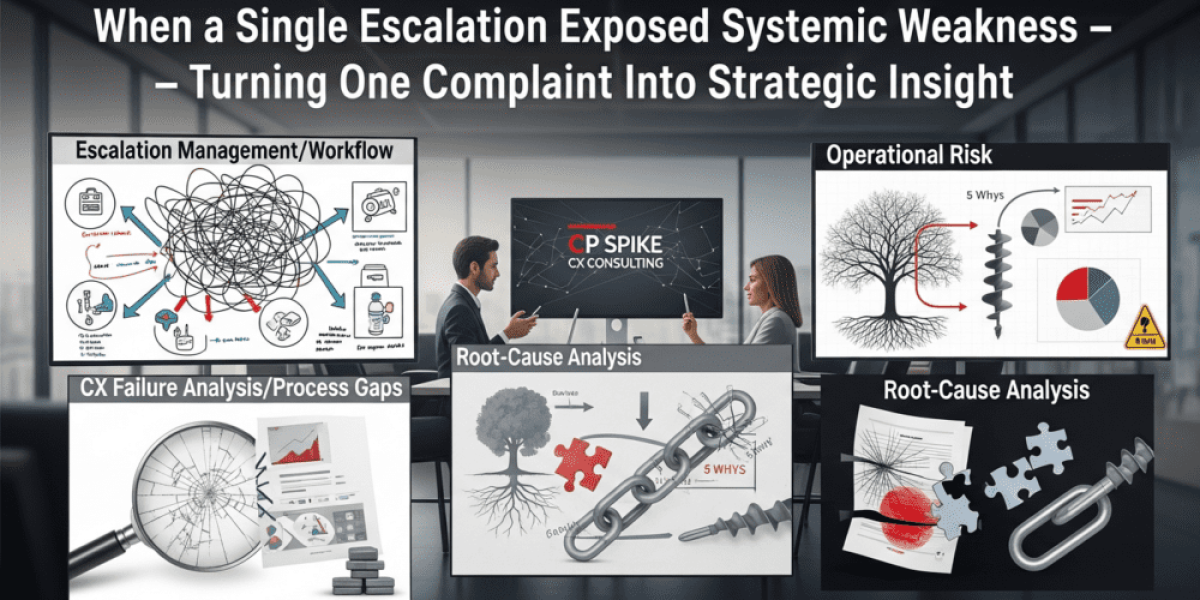
CP Spike was brought in to investigate. Within 48 hours, we discovered seven systemic failures hiding behind one angry email.
By solving “one escalation,” the company fixed:
Routing logic
Knowledge base gaps
Agent permissions
QA sampling bias
Workflow automation
Escalation detection rules
Customer risk scoring
One escalation revealed the entire CX ecosystem was out of sync.
This is more common than most leaders think.
Why Escalations Aren’t Just Customer Issues — They’re Operational Signals
Escalations are rarely isolated incidents. They’re signals of deeper, systemic misalignment.
According to Forrester (2024):
68% of escalations come from preventable operational gaps
52% relate to poor routing or broken workflows
41% stem from missing or outdated knowledge
Only 12% come from agent behavior alone
Escalations are data, not noise.
The Real Reasons Escalations Happen (Beyond Agent Error)
1. Misrouting & Skills-Based Routing Gaps
Calls or chats land with the wrong agent, starting a cascade of frustration.
2. Knowledge Base Inconsistency
When agents get conflicting information, customers suffer.
3. Missing Workflow Automation
If agents must manually update tools, notes, and tags — mistakes happen.
4. Lack of Proactive Alerting
Companies fail to detect escalation signals such as:
repeated contacts
long wait times
negative sentiment
unresolved cases
5. QA Blind Spots
Random sampling misses critical issues.
What’s Overhyped vs What’s Actually Working
Overhyped:
“Escalations mean agents need more training.”
Reality: Escalations usually mean the system is failing agents and customers.
Overhyped:
“Let’s add more workforce.”
Reality: More agents won’t fix broken workflows or routing errors.
Actually Working:
Real-time sentiment monitoring
Escalation scoring models
Automated detection rules
Workflow mapping
Routing audits
Cross-functional war rooms
QA tied directly to escalation patterns
This is what we implement at CP Spike.
The CP Spike Escalation Diagnostic Blueprint
1. Trace the Customer Journey
Every touchpoint, timestamp, and routing event is analyzed.
2. Identify the Systemic Breaks
Tools, workflows, permissions, routing, QA, KB.
3. Build an Escalation Heatmap
Which teams, processes, or channels create most escalations.
4. Implement Prevention Playbooks
Based on root cause, not symptoms.
5. Activate Real-Time Alerts
Detects issues before customers escalate on their own.
Results We Delivered in Similar Cases
Reduced escalations by 47% in 60 days
Decreased repeat contacts by 32%
Improved FCR by 21%
Reduced CX blind spots by 30% via automation
Increased agent confidence & productivity
One escalation can be your biggest opportunity for improvement — if you analyze it properly.
Key Takeaways
Escalations expose system failures, not just agent performance issues.
Most escalations are preventable with better routing, knowledge, and automation.
Treat escalations as operational signals — not noise.
Root-cause analysis turns one complaint into organization-wide improvement.
Companies that fix escalations early win loyalty and reduce cost.
Final Thoughts: Escalations Are Your Early Warning System
At CP Spike, we tell clients: Every escalation is a gift. It reveals what your systems hide.
Fix the root cause — not just the ticket — and you build a stronger, more resilient operation.
SEO Meta Description
A single customer escalation exposed seven systemic CX failures for one company. Learn how CP Spike uses escalation analysis to fix routing, workflows, QA, and customer journey gaps.
CTA
Want to turn escalations into operational insight? Get a CP Spike Escalation Workflow Assessment today.